How Accurately Do 3D-Printed Indirect Bonding Trays Transfer Brackets? A Comparison with Silicone and Vacuum-Formed Trays
In fixed orthodontic treatment, how precisely each bracket ends up where it was planned has a direct effect on how long treatment takes and how well it finishes. Indirect bonding means positioning the brackets first on a computer or a model and then carrying them to the mouth with a transfer tray. In the digital workflow this tray is now often printed directly on a 3D printer. In this article we look at how accurately 3D-printed trays transfer brackets, how they compare with silicone and vacuum-formed trays, what tray resin and design change, and what happens to bracket failures and chair time, using studies with a DOI. None of the numbers were obtained with 3mash printers or resins; each belongs to the printer, resin and test conditions of the study named.
What is indirect bonding?
Indirect bonding means that, instead of placing brackets one by one in the patient's mouth, the brackets are first set in their ideal position on a model or digital scan and then transferred to the teeth all at once with a custom transfer tray. Kono et al. (2026) define direct bonding as placing brackets on each tooth inside the mouth, and indirect bonding as positioning them first on a dental model and then transferring them to the teeth with a customised tray. According to the systematic review by Sabbagh et al. (2022), the method was first proposed in 1972 and has since been used mainly to improve the accuracy of bracket position.
Today there are three main tray types:
Silicone (polyvinyl siloxane) trays: brackets are bonded to a model and a silicone tray is made over them. Many studies use them as the reference.
Vacuum-formed trays: a thermoplastic sheet is formed over the bracketed model with heat and pressure or vacuum; they can be single- or double-layer.
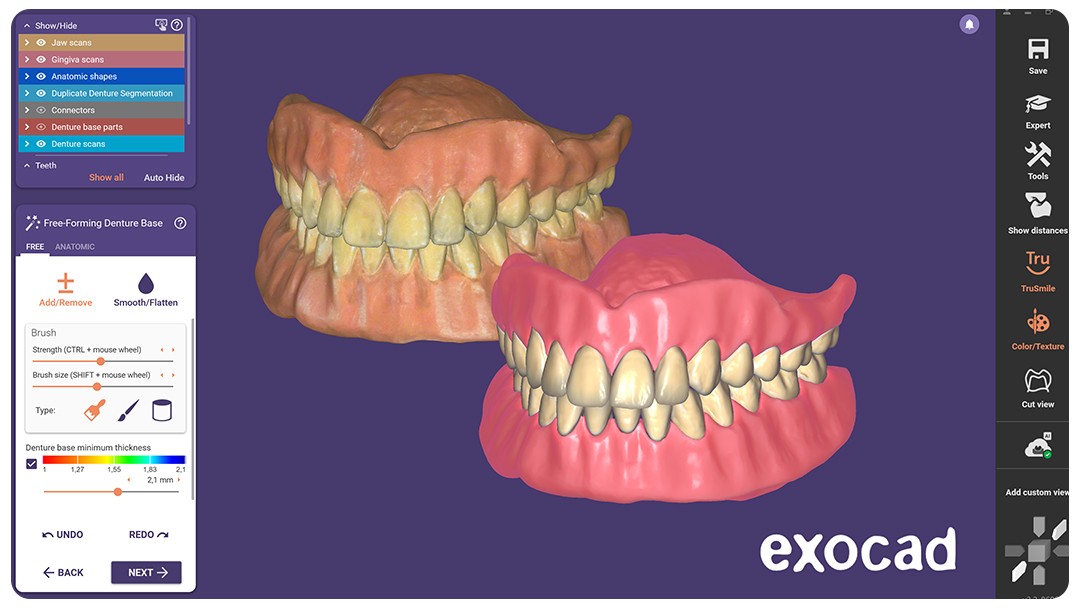
Directly 3D-printed trays: brackets are placed on the digital model in software, and the tray is designed from that model and printed directly in resin. The intermediate model and manual bracket placement steps disappear.
How is bracket transfer accuracy measured?
Transfer accuracy is the difference between the bracket position planned in software and the real bracket position scanned after bonding with the tray. Studies measure this difference in six directions:
Linear errors, mm: mesiodistal (sliding front-to-back along the arch), vertical or occlusogingival (up-down) and buccolingual (towards or away from the tooth).
Angular errors, degrees: angulation (tip), rotation and torque.
The clinical acceptance limit differs between studies: Niu et al. (2021) and Nguyen and Vuong (2025) used 0.5 mm and 2°, Sabbagh et al. (2025) and Yim et al. (2024) used 0.25 mm and 1°, and Hofmann et al. (2022) used 0.2 mm and 1°. "Within the limit" should therefore always be read against the limit of the study in question.
The broadest overview comes from the meta-analysis by Sabbagh et al. (2022). Reviewing 16 studies published up to November 2021, it found mean linear transfer errors of 0.08–0.14 mm and mean angular errors of 0.93°–1.13° for indirect bonding. The authors state that the overall accuracy of indirect bonding can be considered clinically acceptable.
3D-printed, silicone or vacuum-formed tray?
There is no single answer; the result depends on tray design, material, bracket type and measurement method. The studies found the following:
Niu et al. (2021), 3D-printed versus vacuum-formed digital trays: labial brackets were transferred with both trays on ten digital models. The 3D-printed tray had a lower mean mesiodistal error and a higher share of rotation errors within 2°. In both groups more than 90% of linear errors were below 0.5 mm, whereas only 50.9% (3D-printed) and 52.9% (vacuum-formed) of torque errors stayed within 2°. According to the authors, the 3D-printed tray generally performed better, and both trays controlled linear position better than angular position.
Hofmann et al. (2022), a commercial tray printed with PolyJet technology versus a two-layer silicone tray: evaluated on models of 24 patients with limits of 0.2 mm and 1°. Accuracy was highest in the buccolingual direction for both trays (99.5% and 100%). The most frequent deviations were in torque for the printed tray (15.4%) and in rotation for the silicone tray (1.9%); the difference in angular measurements was significant. The authors state that the printed tray was not as accurate as the silicone tray, but that both gave good results and are suitable for clinical use.
Nguyen and Vuong (2025), rigid-printed, flexible-printed and double vacuum-formed trays for lingual brackets: 818 brackets were analysed in 33 adults. Median linear errors did not exceed 0.10 mm for the printed trays and 0.07 mm for the vacuum-formed tray, all below the 0.5 mm limit; median rotation error stayed at or below 1.0° for all trays. Torque, however, rarely met the 2° limit. The vacuum-formed tray was more precise mesiodistally. The study was not randomised and used a single printer-resin combination per tray type.
Sabbagh et al. (2022) meta-analysis: torque error was higher with 3D-printed trays (mean 1.42°) than with other tray types, while their mean error in the mesiodistal and vertical directions and in angulation was lower than in the other groups. The authors write that bracket positioning with 3D-printed trays generally appears to be as accurate as with silicone trays, and that the choice can be based on criteria such as fabrication cost.
The common message: all three tray types can stay within clinical limits in the linear directions; the hardest direction to control, regardless of tray type, is torque. Which tray is better depends on how it is designed and which brackets it is used with.
Should the tray resin be hard or soft?
3D-printed trays can be printed in rigid (hard) or flexible (soft) resins. A hard tray holds the bracket firmly but can be harder to remove; a flexible tray comes off easily but can flex under pressure. The studies show:
Schwärzler et al. (2023), randomised clinical study: 552 brackets were bonded with 46 trays in adolescent patients, randomised 1:1 to trays printed in hard or soft resin. Mean linear transfer errors ranged from −0.011 mm (soft) to −0.162 mm (hard), and angular errors were −0.255° (hard) and −0.243° (soft). There were no significant differences between groups, and all mean transfer errors were within clinical acceptability. The immediate loss rate was 2.4% in the hard group and 2.3% in the soft group. Molar brackets were transferred significantly less accurately. The authors found the soft resin more favourable for accuracy and ease of use.
Yim et al. (2024), six different tray resins: trays printed in three hard and three soft photopolymer resins were compared on 60 plaster replicas. The clearest difference was vertical: depending on the resin, mean vertical error ranged from 0.10 mm to 0.27 mm. Angular errors did not differ significantly between resins. Of all trays, 90.1% met the linear (below 0.25 mm) and 68.8% the angular (1°) clinical limit. The authors stress that linear errors, especially vertical ones, depend on the material, that the gap volume between tray and model alone did not predict accuracy, and that material-specific designs are needed.
Nguyen and Vuong (2025): for lingual brackets, the rigid printed tray was more accurate than the flexible printed tray and had no early bond failures (0/280); the flexible printed tray had a rate of 3.4%. However, the rigid tray needed the longest bonding time, because it had to be thinned with a bur around every bracket before removal. The authors explain why studies with labial brackets found no difference between hard and soft resins by their own stiffer resin, thicker wall and shorter segments.
So the answer to "hard or soft?" depends on whether the brackets are labial or lingual, on tray thickness and on segmentation. Whichever resin is chosen, use one developed for indirect bonding trays and adapt the design to that resin.
Tray design: one piece or segmented, open or closed?
Eglenen and Karabiber (2024), thickness and number of pieces: 1 mm and 2 mm one-piece and three-piece (segmented) trays were compared on 56 printed resin models. In the vertical direction, the error was 0.220 mm for the 1 mm one-piece tray and 0.428 mm for the 2 mm one-piece tray; 0.210 mm for the 1 mm three-piece tray and 0.340 mm for the 2 mm three-piece tray. Buccolingually, the 1 mm three-piece tray (0.180 mm) was more accurate than the 1 mm one-piece tray (0.240 mm). The authors found 1 mm trays more accurate than 2 mm trays and, considering design and placement, recommended the 1 mm one-piece tray for clinical use.
Karabiber and Eglenen (2024), shell versus bar design, randomised clinical trial: in 30 patients, a shell tray that encloses the brackets was compared with a bar tray that holds them with a bar structure. There was no statistical difference between groups, but the share of values outside the clinical acceptance limit was higher with the bar design. The authors describe it as the first clinical study comparing directly printed trays of different designs.
Sabbagh et al. (2025), open, semi-open and closed design: three bracket-coverage designs, 2.0 mm thick, were tested on the same model. Mean deviations were similar for all designs, at 0.07–0.24 mm and 0.42°–1.90°. Of the linear values, 93.0–97.8% were within the clinical limit (0.25 mm); for angular values this fell to 19.3–88.8%, and for torque to 19.3–57.1%. The open design, which leaves the brackets uncovered, exceeded the clinical limits more often than the others.
Nguyen and Vuong (2025): for lingual brackets, the flexible printed and vacuum-formed trays were split into three segments, while the rigid printed tray was split into four short segments because of lingual undercuts; a long, continuous rigid piece would hamper insertion and removal.
In practice: a tray that covers the brackets well and is not thicker than necessary performs better. The number of segments is chosen according to the arch, the bracket side and the stiffness of the tray.
How do the printer, printing and post-curing affect the tray?
Sabbagh et al. (2025) list the factors that can influence transfer accuracy as the choice of brackets and their retention, the 3D printer, printing direction, the printing material, post-processing and the clinician's experience, and note that the literature on these factors is still limited. Production conditions in the reviewed studies were:
Sabbagh et al. (2025): trays were printed on a 3D printer with a z-resolution of 50 µm, directly on the build platform; post-processing followed the material manufacturer's specifications.
Nguyen and Vuong (2025): rigid trays were printed upside down (180°) with supports, cleaned in isopropanol, air-dried and UV post-cured according to the manufacturer's protocol. Because the flexible resin did not print reliably with supports, the tray base was extended down to the build platform and the tray was printed without supports; post-processing again followed the manufacturer's instructions.
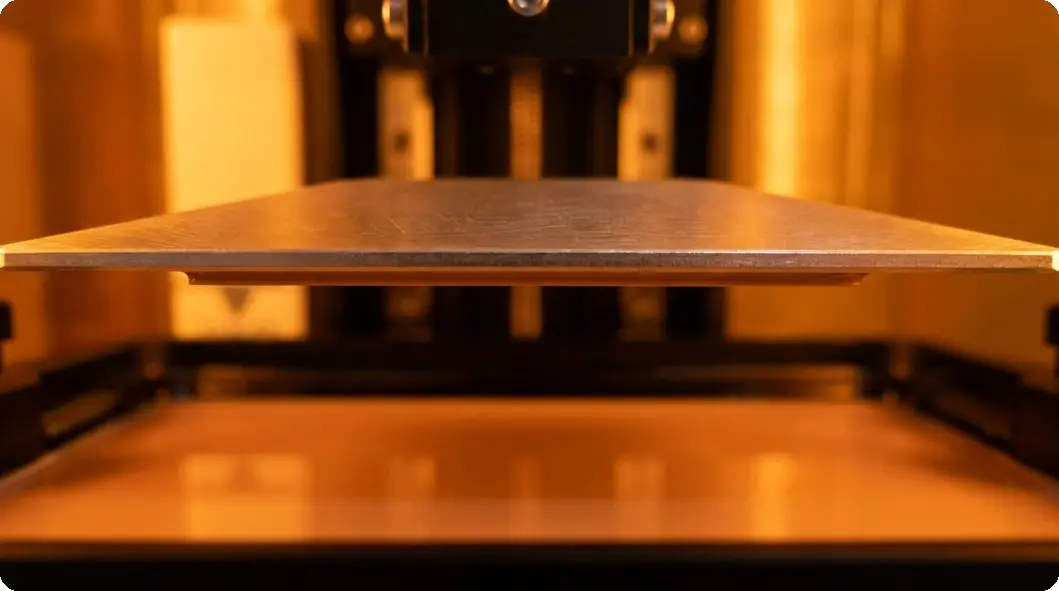
Figure 1: Resin printer build platform
These studies used different printers and did not compare printer technologies with each other. Tray accuracy does not depend on the printer alone but on the combined result of printer, resin, build orientation, support placement, washing and post-curing. The right settings depend on the printer and resin, so the safest starting point is the layer height, orientation and post-processing protocol recommended by the tray resin manufacturer. We cover orientation in our build orientation article, supports in our support structures guide, washing in our IPA washing guide, and the effects of under- and over-curing in our overcure and undercure guide (in Turkish).
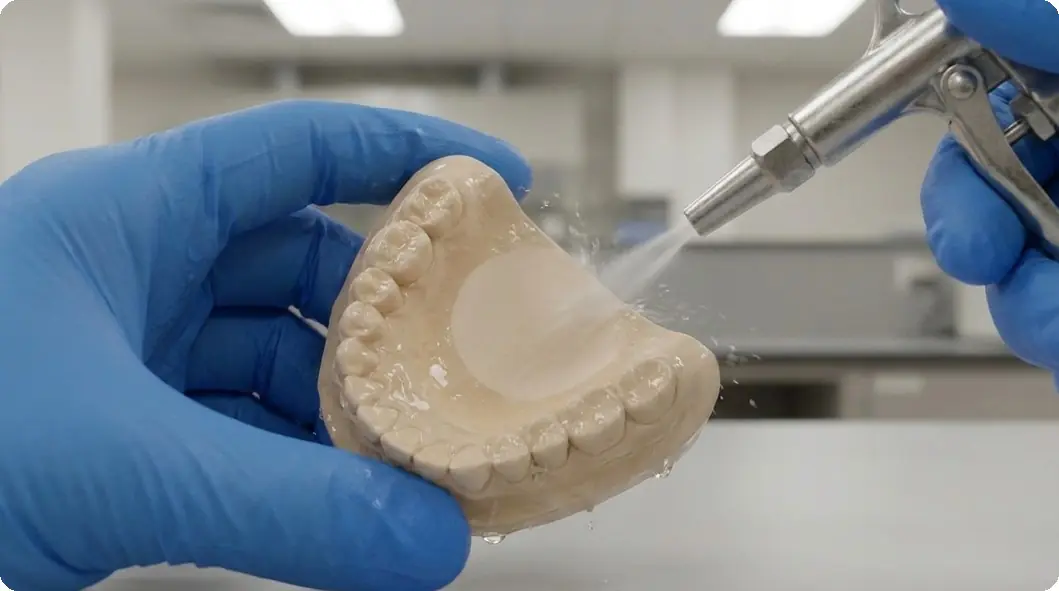
Figure 2: Post-print drying
Do brackets fail more often with indirect bonding?
Bracket failure is the most debated issue in indirect bonding. Failure rates vary clearly with tray type, bracket side and technique:
Schwärzler et al. (2023): in the randomised study with 3D-printed trays, immediate bracket loss was 2.4% (hard) and 2.3% (soft); the authors considered these rates low compared with the current literature.
Nguyen and Vuong (2025): for lingual brackets, early bond failure was 0% with the rigid printed tray, 3.4% with the flexible printed tray and 0.7% with the double vacuum-formed tray.
Sabbagh et al. (2025): in the laboratory, the immediate bracket loss rate ranged from 1.7% to 6.7% across tray designs, with no significant differences between designs.
Kono et al. (2026), clinical study: in this study of 124 analysed patients, indirect bonding with single-tooth transfer trays led to significantly more bracket failures per patient over the course of treatment than direct bonding, regardless of experience level (means of 7.21 versus 2.99 for clinicians with 1–3 years' experience; 7.69 versus 2.54 for 4–6 years). In contrast, intentional reattachments were fewer with indirect bonding (1–3 years: 3.48 versus 9.15; 4–6 years: 2.05 versus 7.54). The authors link the higher failure count to technique-related factors such as adhesive handling, tray fabrication quality, reduced pressure transmission through the tray and moisture control.
These results do not measure bond strength in the laboratory; they report the number of brackets lost during bonding or in the clinic. The common advice from the studies for reducing failures is a well-seated tray, correct adhesive handling, moisture control, and removing the tray without disturbing the brackets.
Does indirect bonding shorten chair time?
Kono et al. (2026): for clinicians with 1–3 years' experience, the time to bond brackets from the lower incisors to the first molars was 36.25 minutes with indirect and 61.63 minutes with direct bonding. For clinicians with 4–6 years' experience the difference was not significant (33.84 versus 42.31 minutes).
Nguyen and Vuong (2025): for lingual brackets, mean bonding time was 68.4 minutes with the rigid printed tray, 45.0 with the flexible printed tray and 33.0 with the double vacuum-formed tray. The rigid tray's time came from thinning it with a bur before removal. The authors note that a tray architecture balancing rigidity and elasticity can markedly improve chairside efficiency without compromising accuracy.
Chair time can be shorter, but the work does not disappear: Sabbagh et al. (2025) point out that the technique involves more time at the computer (mostly by the dentist) and higher initial costs.
What do clinical outcomes and clinician experience show?
Kono et al. (2026): for clinicians with 1–3 years' experience, total treatment time was 30.61 months with indirect and 35.43 months with direct bonding, and the post-treatment occlusal score (CR-Eval; lower is better) was better with indirect bonding (47.74 versus 53.11). For clinicians with 4–6 years' experience most outcomes did not differ significantly. The authors stress that the subgroup results should be read as exploratory.
Sabbagh et al. (2025): a dentist without orthodontic experience but trained in the system exceeded the clinical limits significantly more often than an experienced orthodontist in the vertical and torque directions; mean values were comparable.
Karabiber and Eglenen (2024) and Schwärzler et al. (2023): in both randomised clinical studies 3D-printed trays were used in patients, and either mean errors stayed within clinical acceptability (Schwärzler et al.) or the two designs did not differ significantly (Karabiber and Eglenen). In Schwärzler et al. molar brackets were transferred less accurately; in Karabiber and Eglenen tip differed between tooth groups.
How to get started with 3D-printed indirect bonding trays in the lab
Check the scan and the plan. Confirm the bracket positions on the digital model with the clinician; the tray cannot be more accurate than the plan.
Choose a resin made for trays. Use a resin recommended for indirect bonding trays and suitable for intraoral use. Choose hard or flexible according to the bracket side (labial/lingual) and the tray design.
Adapt the design to the resin. Choose a design that covers the brackets well without being thicker than necessary; in the studies, 1 mm trays were more accurate than 2 mm trays, and a design leaving the brackets uncovered exceeded the limits more often. Split the tray into segments if needed.
Set print parameters for your printer and resin. Start with the layer height, exposure, orientation and support placement recommended by the resin manufacturer; keep supports away from the bracket slots and the inner surface that seats on the teeth.
Wash and post-cure as instructed. Use the recommended solvent, washing time and curing unit, and dry the part completely. Leave no tacky residue on the surface.
Check fit and bracket seating. Make sure the brackets sit in the tray without moving and that the tray seats on the model without gaps; pay particular attention to molars and torque.
Collect clinical feedback. Record failed brackets, teeth that needed rebonding and how easily the tray came off, and refine the design and resin choice accordingly.
Why do study results differ?
The reviewed studies used different printers, resins, tray thicknesses and designs, bracket types (labial or lingual), measurement methods and clinical limits (0.2 mm/1°, 0.25 mm/1°, 0.5 mm/2°). Some were done on models in the lab, others in patients. According to Nguyen and Vuong (2025), the fact that vacuum-formed trays led in their lingual study while printed trays led in labial studies reflects workflow and design rather than technology. So a number from one study should not be transferred directly to another printer, resin or design; results depend on the printer and resin, and the manufacturer's guidance should be followed.
Conclusion
In the studies reviewed, 3D-printed indirect bonding trays mostly transferred brackets within clinical limits in the linear directions and were used in patients in two randomised clinical studies. The weakest point, regardless of tray type, is torque. Tray resin, thickness and bracket-covering design clearly change the result; bracket failures and chair time also depend on the tray architecture, the technique and the clinician's experience. When printing trays or models with 3mash 3D printers and dental 3D printer resins (in Turkish), follow the product's own guidance for layer height, exposure, washing and post-curing; the 3mash technical support team is happy to help with questions. For another use of 3D printing in orthodontics, see our article on 3D-printed retainers.
Frequently asked questions
Are 3D-printed indirect bonding trays as accurate as silicone trays?
It depends on the study. Hofmann et al. (2022) found the angular accuracy of a PolyJet-printed tray lower than that of a silicone tray, but considered both suitable for clinical use. The authors of the meta-analysis by Sabbagh et al. (2022) state that 3D-printed trays generally appear to be as accurate as silicone trays.
In which direction are transfer errors largest?
Torque. In Niu et al. (2021) only about half of torque errors stayed within 2°, and in the lingual study by Nguyen and Vuong (2025) torque failed to meet the limit in most regions.
Is hard or soft resin better?
In a randomised study with labial brackets (Schwärzler et al., 2023), there was no significant difference in accuracy between the two resins and loss rates were similar (2.4% and 2.3%). For lingual brackets, the rigid printed tray was more accurate and had no failures, but took longer (Nguyen and Vuong, 2025).
How thick should the tray be?
In the laboratory study by Eglenen and Karabiber (2024), 1 mm trays were more accurate than 2 mm trays and a 1 mm one-piece tray was recommended. This result belongs to one resin and design system; also take your own resin manufacturer's recommendation into account.
Does indirect bonding shorten chair time?
In Kono et al. (2026), bonding took 36.25 minutes with indirect and 61.63 minutes with direct bonding for clinicians with 1–3 years' experience; for more experienced clinicians the difference was not significant. In the same study, bracket failures were more frequent with indirect bonding.
References
Sabbagh H, Khazaei Y, Baumert U, Hoffmann L, Wichelhaus A, Janjic Rankovic M. Bracket Transfer Accuracy with the Indirect Bonding Technique—A Systematic Review and Meta-Analysis. Journal of Clinical Medicine. 2022;11(9):2568. https://doi.org/10.3390/jcm11092568
Niu Y, Zeng Y, Zhang Z, Xu W, Xiao L. Comparison of the transfer accuracy of two digital indirect bonding trays for labial bracket bonding. The Angle Orthodontist. 2021;91(1):67–73. https://doi.org/10.2319/013120-70.1
Hofmann EC, Süpple J, von Glasenapp J, Jost-Brinkmann PG, Koch PJ. Indirect bonding: an in-vitro comparison of a Polyjet printed versus a conventional silicone transfer tray. The Angle Orthodontist. 2022;92(6):728–737. https://doi.org/10.2319/122021-925.1
Schwärzler A, Nemec M, Lettner S, Rank C, Schedle A, Jonke E. 3D printed indirect bonding trays: Transfer accuracy of hard versus soft resin material in a prospective, randomized, single-blinded clinical study. Dental Materials. 2023;39(11):1058–1065. https://doi.org/10.1016/j.dental.2023.09.011
Yim E, Liu J, Choi SH, Chung CJ, Lee KJ, Lee SB, Kim KB, Cha JY. Potential for bracket bonding errors based on tray accuracy and fit: Evaluation of 6 photopolymer resins for indirect bonding trays. American Journal of Orthodontics and Dentofacial Orthopedics. 2024;166(6):595–607. https://doi.org/10.1016/j.ajodo.2024.08.005
Eglenen MN, Karabiber G. Comparison of 1- and 3-piece directly 3-dimensional printed indirect bonding trays: An in vitro study. American Journal of Orthodontics and Dentofacial Orthopedics. 2024;166(6):524–537. https://doi.org/10.1016/j.ajodo.2024.07.015
Karabiber G, Eglenen MN. 3D printed indirect bonding trays: transfer accuracy of bar vs shell design in a prospective, randomized clinical trial. The Angle Orthodontist. 2024;94(6):648–656. https://doi.org/10.2319/020524-90.1
Sabbagh H, Hoffmann L, Wichelhaus A, Kessler A. Influence of the design of 3D-printed indirect bonding trays and experience of the clinician on the accuracy of bracket placement. Journal of Orofacial Orthopedics. 2025;86(6):363–373. https://doi.org/10.1007/s00056-024-00517-2
Nguyen VA, Vuong TQT. Transfer accuracy and chairside efficiency of rigid- and flexible-printed versus double vacuum-formed lingual indirect bonding trays: a prospective cohort study. Scientific Reports. 2025;15:29320. https://doi.org/10.1038/s41598-025-14069-x
Kono K, Tanizaki S, Fujisawa A, Murakami T, Kawanabe N, Nakamura M, Hoshijima M, Hayano S, Izawa T, Kamioka H. Effect of operator experience level on clinical outcomes of indirect- and direct-bonding techniques: A single-center, open-label, quasi-randomized controlled clinical trial. Korean Journal of Orthodontics. 2026;56(5):360–371. https://doi.org/10.4041/kjod25.213