For a long time, crowns from a 3D printer were used only as provisional restorations. With newer ceramic-filled composite resins, printing definitive single crowns has become part of the digital workflow as well. In this article we look at how well printed permanent crowns fit, where they stand against milled composite, lithium disilicate and zirconia in strength, wear and color, how post-curing and the bonding protocol change the outcome, and what clinical studies show so far, based on publications with a DOI. Provisional crowns and bridges are covered in a separate article: 3D-printed provisional crowns and bridges. None of the numbers below were obtained with 3mash printers or resins; each belongs to the material, printer and test conditions of the study cited.
What is a 3D-printed permanent crown?
A 3D-printed permanent (definitive) crown is a single-tooth restoration printed layer by layer from a light-curing resin, based on a digital design, and intended to stay in the mouth long term. The resins used for this are usually composites with ceramic or glass filler in a resin matrix; in the literature they appear as "ceramic-filled resin", "hybrid resin-ceramic" or "printable composite". The umbrella review by Dascanio et al. (2026) notes that these materials are produced with vat photopolymerization technologies such as SLA, DLP and LCD. Which technology is used depends on the printer and the resin; the resin's instructions for use state which printers it is validated for.
The main difference between a permanent and a provisional crown resin is the intended service time and the filler content designed for it. Inlays, onlays and endocrowns can be made from the same materials; we will cover them in a separate article and focus on single crowns here.
How well do 3D-printed permanent crowns fit?
Marginal fit describes how small the gap is between the crown margin and the finish line on the tooth; internal fit describes how closely the inner surface of the crown sits on the prepared tooth. Fit stands out as the strongest area for printed permanent crowns:
Alawawda et al. (2026): In a systematic review and meta-analysis of 14 laboratory studies comparing printed and milled resin-based permanent crowns, the pooled analysis of all studies showed no significant difference in marginal gap, with very high heterogeneity (I² 99.8%). When only the 10 tooth-supported, direct-measurement study conditions were analyzed, printed crowns had significantly smaller marginal gaps.
Lalvay et al. (2026): In a network meta-analysis covering 50 laboratory studies, printed composites showed better marginal and internal fit than glass ceramics, polymer-infiltrated ceramic networks and polymeric restorative materials. The only exception was direct composites.
Edelmann et al. (2026): In printed molar crowns bonded to extracted human molars, the share of perfect margin ranged from 97.8% to 100.0% before chewing simulation and from 92.3% to 99.0% after it. The authors report that good marginal adaptation was not negatively affected by aging.
Atasoy et al. (2026): For crowns, onlays and laminate veneers printed at different build angles with an LCD-based printer and a definitive composite resin, the build angle significantly affected accuracy. The best angle depended on the restoration type; the optimal angle for crowns differed from that for onlays and veneers. All values stayed below the 100 µm clinical threshold used in the study.
These findings do not mean "a printed crown always fits better"; the result depends on the design, build angle and post-processing. The general effect of build orientation is explained in our article on build orientation in dental 3D printing. For angle and support placement, start from the recommendation of your resin manufacturer.
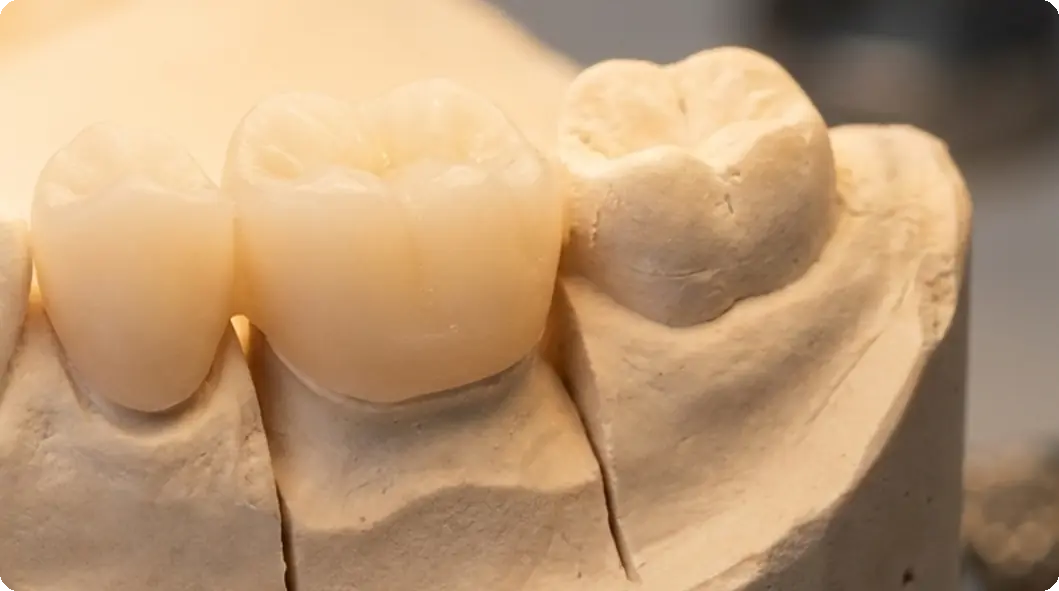
Figure 1: Crown fit on the model
How strong are 3D-printed permanent crowns compared with milled composite, lithium disilicate and zirconia?
Fracture resistance is the highest load a crown can take before it breaks (N); flexural strength is the highest stress a material can withstand in bending before it fractures (MPa). One point matters in this comparison: printed permanent resins belong to the composite class, lithium disilicate is a glass ceramic and zirconia is a polycrystalline ceramic. Materials from different classes naturally differ in strength, hardness and stiffness, and their indications are defined accordingly.
Compared with milled resin crowns: In the meta-analysis by Alawawda et al. (2026), milled resin crowns showed higher fracture resistance than printed crowns, especially after artificial aging. The umbrella review by Dascanio et al. (2026) also reports that printed resins generally had lower flexural strength, elastic modulus and fatigue resistance than milled CAD/CAM materials. Both papers stress that the certainty of evidence is low and heterogeneity between studies is high.
Loaded molar crowns: In the study by Edelmann et al. (2026), all printed molar crowns survived thermal cycling and mechanical loading without failure. Fracture forces ranged from 1707.9 ± 470.2 N to 2839.6 ± 682.1 N depending on the material; the milled composite reference group reached 3121.8 ± 557.1 N. The authors describe sufficient to good in vitro performance and potential suitability for posterior restorations.
Compared with lithium disilicate: Bora et al. (2025) compared a 50% filled printed crown material with lithium disilicate. None of the onlay restorations bonded to human molars with resin cement showed cracks during 2 million fatigue cycles; load to failure was 2574 ± 303 N for the printed material and 2396 ± 277 N for lithium disilicate, with no significant difference. The authors note that the printed material has lower flexural strength but higher ductility than lithium disilicate. The restorations tested in this study were onlays, not full crowns.
In practice, a printed permanent crown is not meant to replace ceramics wherever maximum strength is needed; it should be used within the advantages and limits of its own material class, with sound case selection. The teeth and minimum thickness a resin is indicated for are stated in its instructions for use.
Do 3D-printed permanent crowns wear or discolor?
Wear is the loss of material from the surface during chewing and brushing; antagonist wear is the loss of enamel on the natural tooth opposite the restoration. Color stability describes how well a restoration keeps its color over time, and surface roughness how smooth the surface is at a microscopic level.
Wear compared with zirconia: In the randomized clinical trial by Shin et al. (2026), printed resin crowns showed greater wear depth after one year (92.33 ± 69.81 µm) than monolithic zirconia crowns (14.48 ± 7.95 µm).
Wear compared with lithium disilicate: In the study by Bora et al. (2025), lithium disilicate showed more wear of its own and caused more opposing enamel wear than the printed material at every interval tested.
Effect of post-curing on wear: Soydan and Manav (2026) showed that the post-polymerization method affected the wear of a ceramic-reinforced definitive crown resin printed on a DLP printer. Groups polymerized in a nitrogen atmosphere had wear volumes comparable to a milled hybrid ceramic (0.12 ± 0.05 mm³); the highest wear was seen in a group polymerized with standard UV light (0.33 ± 0.09 mm³).
Surface roughness: Wang et al. (2025) compared six hybrid resin-ceramic materials recommended for definitive restorations; mean roughness (Ra) ranged from 0.28 ± 0.13 µm to 2.91 ± 0.27 µm depending on the material, and the smoothest surface also had the least bacterial adhesion.
Color: The meta-analysis by Mosaddad et al. (2026) (37 studies) found that printed resin-based materials tended to show greater color change than milled ones after aging and staining (weighted mean difference in ΔE 1.40), with very high heterogeneity (I² > 99%). Daher et al. (2026), on the other hand, found that in specimens stored in tea, red wine, coffee and curry, two printed composites measured over a black background showed discoloration comparable to two milled composites and one lithium disilicate, and less than all direct composites.
So wear and color results depend on both the comparison material and the resin. Polishing, glazing and correct post-curing are decisive for both properties; see our curing and glazing guide (in Turkish).
Why do water sorption, degree of conversion and biocompatibility matter?
Degree of conversion shows how much of the monomer in a resin has been converted into polymer chains; water sorption is the amount of water a material takes up in the oral environment. Both affect long-term durability and biocompatibility.
According to the umbrella review by Dascanio et al. (2026), printed resins generally showed higher water sorption and solubility than milled CAD/CAM materials.
Er and Çağlar (2026) found that, in a ceramic-reinforced permanent crown resin post-cured under nitrogen, neither layer thickness nor post-curing level significantly affected water sorption or solubility. Insufficient post-curing, however, lowered flexural strength and surface quality.
Aktuğ Karademir et al. (2025) showed in two permanent printing resins that degree of conversion and microhardness increased and coffee staining decreased as post-curing time increased. Degree of conversion correlated positively with hardness (r = 0.796) and negatively with staining (r = −0.763). The type of curing unit also had a significant effect.
Wang et al. (2025) found no harmful effect on human gingival fibroblasts for any of six hybrid resin-ceramic materials; relative cell viability stayed above 70% for all of them.
The common message is that post-processing determines not only strength but also color and biocompatibility. We explain the effects of under- and over-curing in our overcure and undercure article (in Turkish). For the post-curing unit, time and atmosphere (including nitrogen), always follow the resin manufacturer's instructions.
How is a 3D-printed permanent crown made? Step-by-step workflow
The sequence below is a general workflow. Time, light, layer and temperature settings vary by printer and resin, so we do not give numbers here.
Scan and design: Scan the prepared tooth and design the crown. A clearly defined finish line, crown thickness and cement space should follow the resin manufacturer's recommendations.
Orientation and supports: Place the crown at the angle recommended by the manufacturer; keep supports away from the margin and the intaglio surface as far as possible.
Printing: Print with the printer profile and layer thickness validated for the resin.
Washing and drying: Remove residual resin with the method recommended by the manufacturer and dry completely. See how to wash dental 3D prints.
Post-curing: Cure with the unit, time and atmosphere in the instructions. Incomplete curing can reduce strength, wear resistance and color stability.
Finishing and polishing or glazing: Remove support marks, then polish the surface or coat it with the glaze recommended by the manufacturer.
Try-in and cementation: Check marginal fit and occlusion, then follow the bonding steps below.
How do you bond a 3D-printed permanent crown?
Bond strength is how strongly the cement adheres to the inner surface of the crown, and it is a critical factor in the success of permanent resin crowns.
Kagaoan et al. (2024): In a systematic review of six laboratory studies, crown materials printed from photopolymer resins showed high bond strength values comparable to milled materials. No cement type was clearly superior, and airborne-particle abrasion with alumina was generally recommended.
Palomeque et al. (2026): For five printed and three milled composite materials, airborne-particle abrasion with aluminum oxide followed by silane was appropriate for both printed and milled materials. Hydrofluoric acid etching was not recommended for all resin-ceramic materials, even when followed by silane.
Based on these findings, the general sequence can be summarized as follows; for pressure, time and product choice, follow the resin and cement manufacturers' instructions:
Air-abrade the intaglio surface of the crown with aluminum oxide.
Clean and dry the surface.
Apply the silane or primer recommended by the manufacturer.
Cement with the cement recommended for the resin and remove excess.
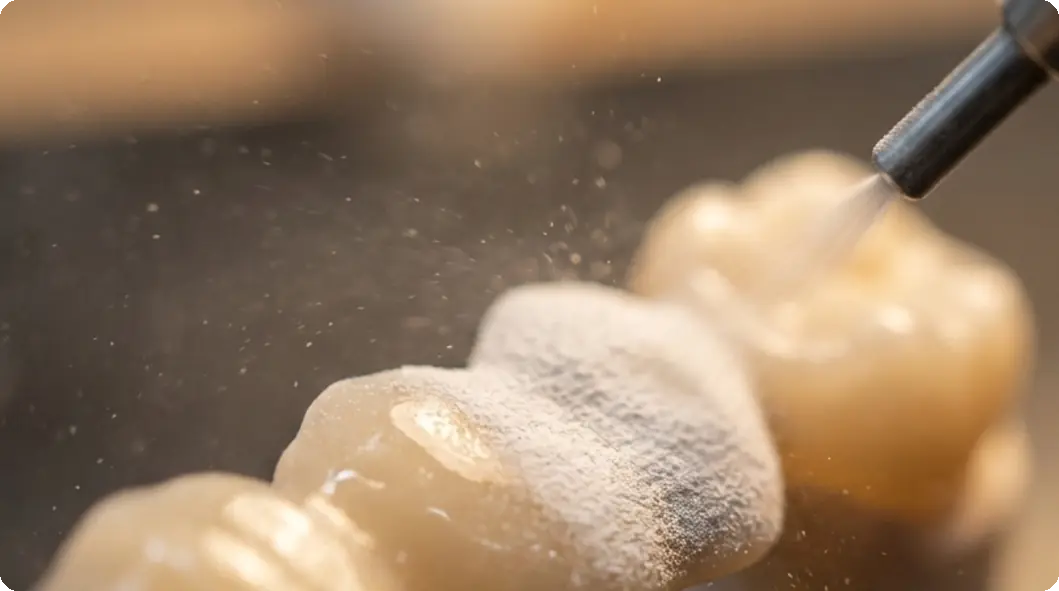
Figure 2: Air abrasion before cementation
How long do 3D-printed permanent crowns last clinically?
Clinical data are still limited and short term. The umbrella review by Dascanio et al. (2026) states that short-term clinical evidence (6–24 months) is encouraging for inlays, onlays, overlays, crowns and veneers, but remains insufficient to draw conclusions about true long-term behavior. Two clinical studies stand out:
Shin et al. (2026): 56 adults needing a tooth-supported posterior single crown were randomized to a printed resin crown or a monolithic zirconia crown. One-year fracture-free survival was 78.6% for printed crowns and 92.9% for zirconia crowns; the difference was not statistically significant (P = 0.12). Seven of the eight fractures occurred in the most-posterior restored teeth, and this position was associated with fracture. Marginal gaps were similar, occlusal gaps were smaller for printed crowns, and periodontal outcomes and patient satisfaction did not differ. Because of greater wear and a numerically higher fracture rate, the authors advise caution for posterior use and call for longer follow-up.
Sonkaya and Bek Kürklü (2025): 33 overlays and endocrowns made from a ceramic-filled permanent printing resin were followed for two years in 30 patients. All restorations showed clinically acceptable performance; the only criterion that changed significantly was marginal discoloration (the share of best scores fell from 100% to 69.7%). This study concerns partial restorations, not full crowns.
On the laboratory side, Lalvay et al. (2026) report that printed resins stand out for fit and dimensional accuracy, while their mechanical and optical properties are generally similar to or below those of most conventional materials. According to the authors, further improvements in material formulation, post-curing and polishing protocols are needed for long-term single-unit restorations to match the overall performance of established conventional systems, and longer-term clinical data are also needed (Dascanio et al., 2026). Clinically, this puts case selection first: load distribution, occlusion, a history of bruxism and the position of the tooth should be assessed together, and the patient should be recalled regularly.
What are the limitations of 3D-printed permanent crowns?
Most evidence comes from the laboratory: Meta-analyses rely largely on in vitro studies, and the certainty of evidence is low (Alawawda et al., 2026; Lalvay et al., 2026).
Strength depends on material class: Printed resins generally showed lower flexural strength and fatigue resistance than milled materials (Dascanio et al., 2026), although some comparisons found no significant difference under load (Bora et al., 2025).
Wear and color vary by resin: More wear than zirconia (Shin et al., 2026) and, on average, more color change than milled materials (Mosaddad et al., 2026) have been reported, while some printed composites showed color stability similar to milled materials (Daher et al., 2026).
Long-term clinical data are missing: Current clinical follow-ups are limited to one to two years (Shin et al., 2026; Sonkaya and Bek Kürklü, 2025).
For printers and resins suitable for permanent and provisional crowns, see our 3mash 3D printers and dental resins pages.
Frequently asked questions
What is the difference between a 3D-printed permanent crown and a provisional crown?
Permanent crown resins are designed to stay in the mouth long term, usually as ceramic- or glass-filled composites; provisional resins are for short-term use until the definitive restoration is ready. For provisional crowns, see our provisional crown article.
Do 3D-printed permanent crowns fit better than milled crowns?
In the meta-analysis by Alawawda et al. (2026), printed crowns had smaller marginal gaps in studies with comparable measurement conditions; Lalvay et al. (2026) also found better fit for printed composites than for glass ceramics and polymer-infiltrated ceramics.
How long do 3D-printed permanent crowns last in the mouth?
Clinical data are still short term. Dascanio et al. (2026) note that clinical evidence from 6–24 months is encouraging but not sufficient to draw conclusions about long-term behavior. Case selection and regular recalls therefore matter.
Does a printed permanent crown wear the opposing tooth?
In the study by Bora et al. (2025), the printed crown material tested caused less opposing enamel wear than lithium disilicate and also wore less itself.
Does post-curing change the properties of a permanent crown?
Yes. Post-curing affected degree of conversion, hardness and staining (Aktuğ Karademir et al., 2025), flexural strength (Er and Çağlar, 2026) and wear (Soydan and Manav, 2026). Follow the resin manufacturer's instructions for unit, time and atmosphere.
How should a printed permanent crown be prepared before cementation?
Studies support air abrasion of the intaglio surface with aluminum oxide followed by silane; hydrofluoric acid is not recommended for every resin-ceramic material (Kagaoan et al., 2024; Palomeque et al., 2026).
References
Alawawda O, Kızıldağ Z, Yeşil Z. Fracture Resistance and Marginal Adaptation of 3D-Printed Versus Milled Resin-Based Permanent Crowns: A Systematic Review and Meta-Analysis. Journal of Esthetic and Restorative Dentistry. 2026;38(12):2261–2272. https://doi.org/10.1111/jerd.70248
Dascanio R, Kury M, Özcan M, Cavalli V. How durable are 3D-printed dental resin-based composites? An umbrella review. Journal of Dentistry. 2026;168:106626. https://doi.org/10.1016/j.jdent.2026.106626
Lalvay EJA, de Carvalho FG, da Silva AR, Morganti FAC, Collares FM, Münchow EA. 3D-printed resins intended for long-term restoration vs. conventionally used materials: A systematic review and network meta-analysis of in vitro studies. Journal of Dentistry. 2026;167:106531. https://doi.org/10.1016/j.jdent.2026.106531
Mosaddad SA, Diaz P, Khanzadeh H, Khorasani E, Peláez J, Suárez MJ. Do color stability and translucency differ between 3D printed and milled resin-based fixed dental restorations? A systematic review and meta-analysis. The Journal of Prosthetic Dentistry. 2026;136(1):30–39. https://doi.org/10.1016/j.prosdent.2026.02.015
Kagaoan Z, Liu X, Cameron A, Aarts J, Choi JJE. Factors influencing the bond strength of additively manufactured crown materials in dentistry: A systematic review of in vitro studies. Journal of Dentistry. 2024;144:104908. https://doi.org/10.1016/j.jdent.2024.104908
Shin H, Oh KC, Kim JH. Evaluation of full-veneer crowns fabricated with 3D printing resin material for definitive prostheses: A 1-year randomized controlled prospective study. Journal of Dentistry. 2026 (online); 176:107097. https://doi.org/10.1016/j.jdent.2026.107097
Sonkaya E, Bek Kürklü GZ. Additively Manufactured Definitive Crown Resins on Premolar and Molar Teeth: 2-Year Results of a Prospective Clinical Study. The International Journal of Prosthodontics. 2025;38(3):279–289. https://doi.org/10.11607/ijp.9200
Edelmann N, Hahnel S, Rauch A, Fleiner FJ, Rosentritt M. Fracture force and marginal adaptation of additively fabricated resin composite crowns. Journal of Dentistry. 2026;174:106830. https://doi.org/10.1016/j.jdent.2026.106830
Bora PV, Lawson NC, Givan DA, Arce C, Roberts H. Enamel wear and fatigue resistance of 3D printed resin compared with lithium disilicate. The Journal of Prosthetic Dentistry. 2025;133(2):523.e1–523.e9. https://doi.org/10.1016/j.prosdent.2024.10.024
Atasoy S, Aktuğ Karademir S, Akgün O, Çoban R, Kaya A. Effect of the build angle on the accuracy of 3D-printed definitive composite resin crowns, onlays, and laminate veneers: An in vitro study. Journal of Dentistry. 2026;175:106937. https://doi.org/10.1016/j.jdent.2026.106937
Soydan M, Manav TY. Effect of postpolymerization on the wear behavior of additively manufactured definitive crown resins. The Journal of Prosthetic Dentistry. 2026;136(4):e125–e132. https://doi.org/10.1016/j.prosdent.2026.07.007
Er A, Çağlar I. Effects of nitrogen-assisted post-curing and layer thickness on the properties of a 3D-printed ceramic-reinforced composite resin for permanent crowns under different aging conditions: an in vitro study. BMC Oral Health. 2026;26(1):2097. https://doi.org/10.1186/s12903-026-09455-4
Aktuğ Karademir S, Atasoy S, Akarsu S, Karaaslan E. Effects of post-curing conditions on degree of conversion, microhardness, and stainability of 3D printed permanent resins. BMC Oral Health. 2025;25(1):304. https://doi.org/10.1186/s12903-025-05664-5
Wang S, Dai J, Xu S, Li P, Fouda AM, Yilmaz B, Alhotan A. Surface characteristics, cytotoxicity, and microbial adhesion of 3D-printed hybrid resin-ceramic materials for definitive restoration. Journal of Dentistry. 2025;152:105436. https://doi.org/10.1016/j.jdent.2024.105436
Daher R, Yantarasri FP, Krejci I, Leprince JG, Ardu S, Lee JH. Biomechanical properties of 3D-printed resin composites compared with subtractive CAD/CAM materials and direct light-cured composites: Color stability. Dental Materials. 2026;42(3):485–492. https://doi.org/10.1016/j.dental.2025.11.010
Palomeque S, Loguercio AD, Arrais CAG, Sánchez C, Pulido C. Three-dimensionally printed and milled composite materials for definitive restorations. Part 2: Effect of surface treatment on the bond strength of light-polymerized resin cement and surface morphology. The Journal of Prosthetic Dentistry. 2026;135(3):581.e1–581.e9. https://doi.org/10.1016/j.prosdent.2025.09.033